November is when a lot of people open their benefits account, see a balance and wonder what it can pay for. Blood work is a good answer. This guide explains when you can use an HSA or FSA for blood tests, what your plan may ask for, and how to spend FSA money before you lose it.
One note before we start: your plan administrator has the last word on any claim, and this isn’t tax advice. What follows is how the IRS rules read and what tends to come up in practice.
Why blood tests count as a medical expense
HSAs and FSAs can only pay for qualified medical expenses, and both use the definition in IRS Publication 502. It describes medical care as paying to diagnose, treat, ease or prevent disease, or to affect how the body works. Two of its entries settle the question for most blood work:
- Laboratory fees: are included when they’re part of medical care.
- Physical examinations: and the diagnostic tests that go with them are included too, and the publication says outright that you needn’t be sick at the time.
So a cholesterol check, an HbA1c or a full metabolic panel all fit. What doesn’t fit is anything bought mainly for general wellness with no link to a health condition, which is why a few plans ask more questions about gray-area tests than about standard blood work.
HSA vs FSA: the rules that matter for lab work
Both accounts pay for the same kinds of expenses, but they behave differently once the money is in. The details are in IRS Publication 969.
| HSA | FSA | |
|---|---|---|
| Who can have one | People covered by a high-deductible health plan (2026 minimum deductible: $1,700 self-only, $3,400 family) | Employees whose employer offers one |
| 2026 contribution limit | $4,400 self-only, $8,750 family | $3,400 per employee; your employer can set less |
| Money you don’t spend | Stays in the account from year to year | Lost at the end of the plan year, unless the plan offers a grace period (up to 2½ months) or a carryover (up to $680) |
| How you pay | HSA debit card, or pay another way and reimburse yourself later | FSA card, or pay and file a claim |
| Paperwork | You keep the records; the IRS can ask for them | The plan needs a third-party statement of what the expense was and what it cost |
| If the expense doesn’t qualify | Taxed as income, plus a 20% additional tax if you’re under 65 | The plan won’t pay it |
The HSA’s big advantage is time. As long as the test happened after you opened the account, you can pay out of pocket today and pay yourself back from the HSA months or years later, provided you still have the receipt.
Do you need a doctor’s order?
Not under the IRS entry for lab fees, which doesn’t mention one. The test has to be medical care, and a panel that checks your blood sugar, cholesterol, kidneys and liver clearly is.
In practice, some plan administrators want more paperwork for tests that could be read as wellness rather than medical care, and a few ask for a letter of medical necessity. A standard blood panel rarely runs into this, but if your card is declined or a claim comes back with questions, that letter is the usual fix. Your plan’s list of eligible expenses will tell you what it expects.
Preventive blood work with no symptoms
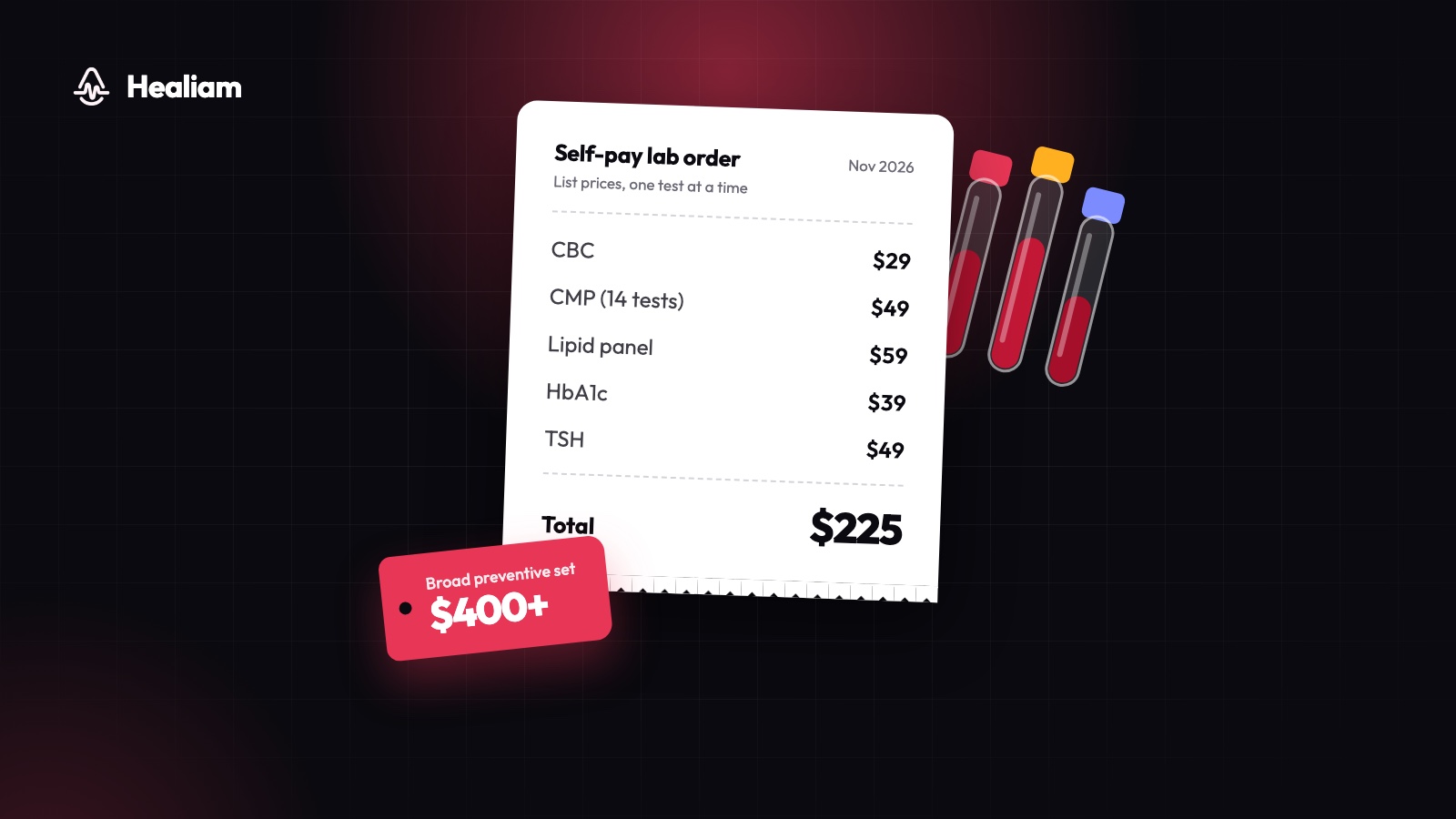
You can use HSA or FSA money for screening when you feel fine. Prevention sits inside how the IRS defines medical care, and the physical examination entry makes clear that being ill isn’t a requirement. Checking your numbers once a year, before anything shows up, is exactly what these accounts allow. If you’re still comparing what that costs, our guide to blood panel prices without insurance lists self-pay prices test by test.
What receipt to keep
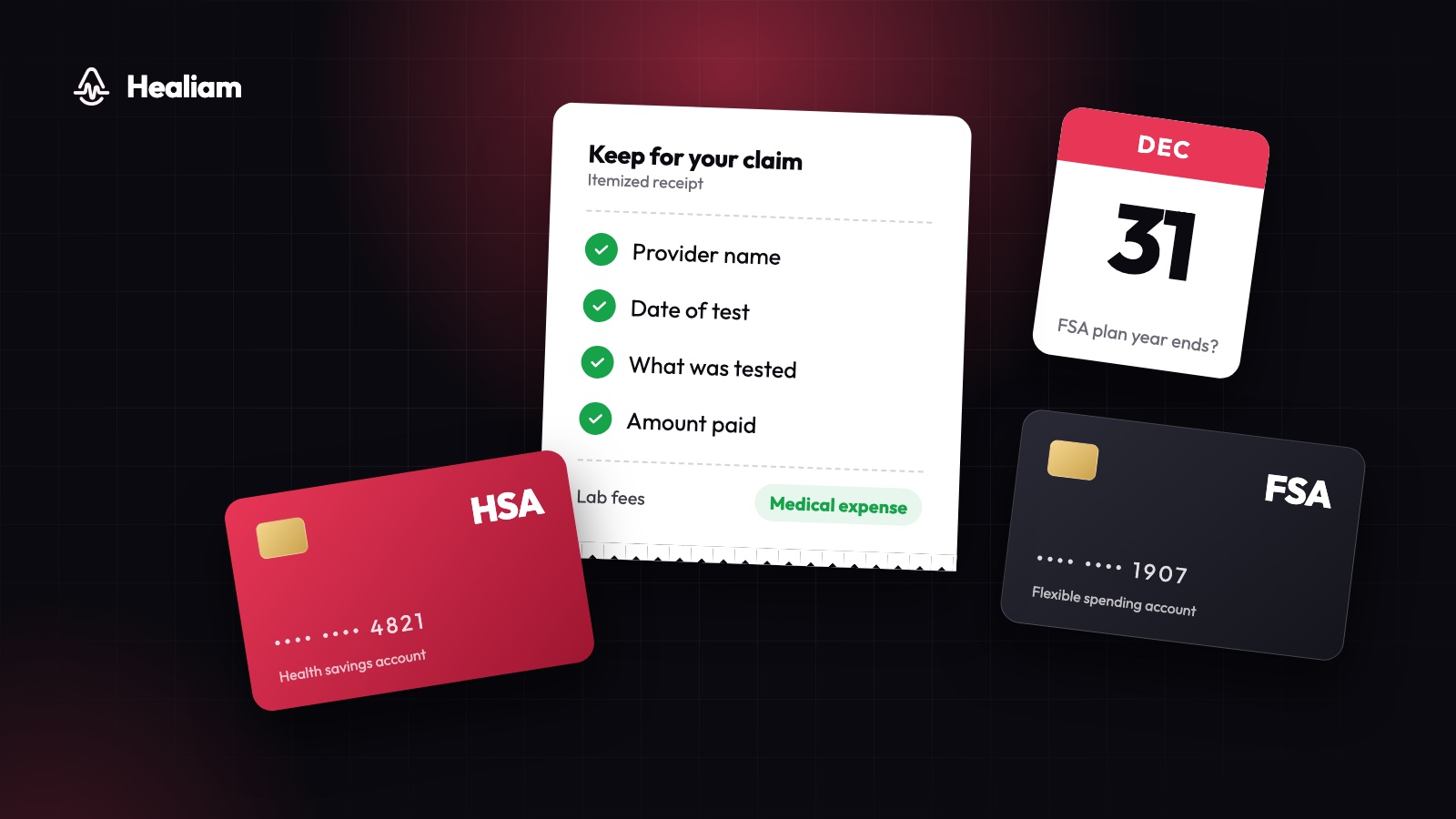
A card statement on its own usually isn’t enough, because it shows where you paid and how much but not what for. An itemized receipt should show:
- The provider’s name: and, ideally, its address.
- The date of the test: which is the date your plan cares about, not the date you paid.
- Who was tested: if you’re claiming for a spouse or dependent.
- What it was for: for example “blood panel” or the list of tests.
- The amount you paid: after any discounts.
For an HSA, file the receipt with your tax records rather than sending it anywhere. The IRS expects you to be able to show three things if asked: the money paid for a qualified medical expense, nobody else had already paid it, and you didn’t also deduct it on your tax return.
Using FSA money before the deadline
If your FSA has money left near the end of the year, a blood test is a sensible use for it. Before you book:
- 1
Check when your plan year ends.
Many end on December 31, but not all of them, so look at your plan documents or account portal.
- 2
Find out if your plan has a carryover, a grace period or neither.
A plan can offer one or the other, or neither. A carryover keeps up to $680 for next year; a grace period gives you up to 2½ more months to spend.
- 3
Book a test date inside the plan year.
FSAs pay for expenses incurred during the coverage period, so the date of service is what counts.
- 4
Get the itemized receipt on the day.
It’s much easier than chasing one in January.
- 5
Submit the claim before your plan’s cut-off.
Many plans allow some weeks after the year ends to send in claims for expenses from that year. Check how long yours gives you.
Paying for a Healiam blood test
Healiam accepts HSA cards, FSA cards and regular credit cards. The full panel is $95 and covers 56 lab measurements, including blood counts, cholesterol, glucose and HbA1c, kidney and liver markers, and thyroid. You book it yourself with no referral or prescription, and there’s no insurance card to bring.
Healiam provides an itemized receipt you can submit to your plan, so FSA claims and HSA records are covered. Draws take place at morning health fairs, and you’ll have results 4 to 5 business days after the draw.
Spending down an FSA? There’s a morning fair within reach in five states: New Jersey and New York share the Rahway fair, while Georgia, Colorado and Texas have their own. See the full list of tests or choose a fair date before your plan year ends.
FAQs
Can I use my HSA to pay for blood tests?
Yes, in most cases. Under IRS Publication 502, lab fees paid for medical care are qualified medical expenses, so you can pay with your HSA card, or pay another way and reimburse yourself later. Keep the itemized receipt.
Are blood tests FSA eligible?
Generally, yes. FSAs use the same IRS definition of medical care as HSAs. Your plan will need proof of the expense, usually an itemized receipt, and the money has to be spent within the plan year unless your plan has a grace period or carryover.
Do I need a doctor’s order to use HSA funds on lab work?
The IRS entry for lab fees doesn’t require one. What matters is that the test is medical care, such as screening for or monitoring a health condition. Some plan administrators ask for extra paperwork in unclear cases, so check your plan’s rules if you’re unsure.
Can I use an HSA for preventive blood work if I have no symptoms?
Yes. The way the IRS defines medical care covers preventing disease as well as treating it, and Publication 502 says you needn’t be ill for an examination and its diagnostic tests to count.
What receipt do I need for HSA or FSA reimbursement on lab tests?
An itemized receipt with the provider’s name, the date of the test, who was tested, what was tested and the amount paid. A card statement alone usually isn’t enough, because it doesn’t show what you paid for.
Can I pay for a Healiam blood test with an HSA card?
Yes. Healiam accepts HSA and FSA cards as well as regular credit cards. The full panel is $95, with no insurance card or doctor’s order needed.
Does Healiam provide a receipt I can submit for reimbursement?
Yes. Healiam provides an itemized receipt you can submit to your HSA or FSA plan, or keep with your tax records for an HSA.
This article is for educational purposes and does not provide medical advice, diagnosis, or treatment. Results should be interpreted in the context of your individual health and, when appropriate, discussed with a licensed healthcare professional. Healiam testing and result delivery do not replace professional medical advice, diagnosis, or treatment.