A liver panel is a small set of blood tests that ask how the liver is doing. Three markers carry a lot of that conversation: ALT, AST, and albumin. All three are on the Healiam liver group, along with bilirubin, alkaline phosphatase, and total protein.
In plain words, the liver makes proteins such as albumin, makes enzymes such as ALT and AST, makes bile, and clears bilirubin, a waste from old red blood cells. An enzyme is a protein that speeds up chemical reactions. Some of these tests also hint at whether liver cells may be injured.
The liver’s alarm
ALT
Usually reported in U/L (units per liter). Use the range printed on your report. Lower levels are the usual finding.
- Higher
- When liver cells are damaged, ALT leaks into the blood. Higher levels may point to liver injury, and not always to something that needs treatment.
The shared messenger
AST
Also reported in U/L. Sometimes called the SGOT test. Check the range on your report.
- Higher
- AST lives mainly in the liver, and also in the heart, muscles, and other tissues. Clinicians often order ALT and AST together. High levels of either, or both, may point to some type of liver damage.
A protein your liver makes
Albumin
A typical adult range often cited is 3.5–5.0 g/dL. Labs differ.
- Higher
- Can reflect hydration and other factors. Read it with the rest of the panel, not alone.
- Lower
- Albumin keeps fluid inside blood vessels and carries hormones, vitamins, and enzymes. Lower results can relate to liver or kidney health, dietary protein, hydration, pregnancy, and some medicines.
ALT results can shift with age, sex, weight, medicines, supplements, and intense exercise. That is another reason a single number is a starting point.
When a liver panel comes up
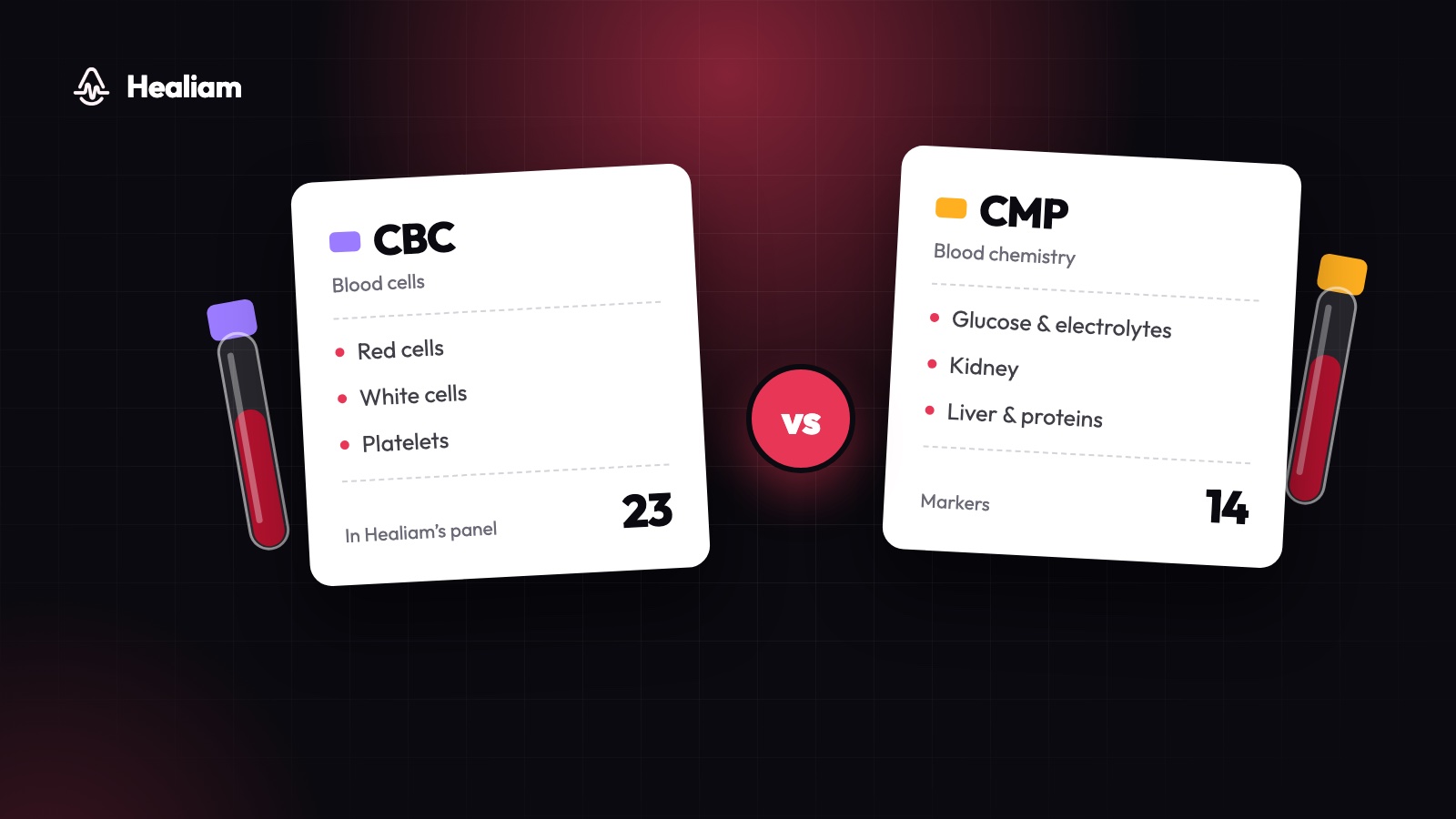
- Liver tests are often included in a comprehensive metabolic panel, including at routine checkups.
- A panel can still be relevant without symptoms if there is a family history of liver disease, alcohol use, obesity, diabetes, or hepatitis exposure.
- Ordered with other blood tests, you may fast for several hours, up to 12. Healiam’s panel asks for 8–12 hours.
- NIDDK estimates that about 1 in 4 U.S. adults has fatty liver disease (MASLD).
This article is for educational purposes and does not provide medical advice, diagnosis, or treatment. Results should be interpreted in the context of your individual health and, when appropriate, discussed with a licensed healthcare professional. Healiam testing and result delivery do not replace professional medical advice, diagnosis, or treatment.