Most people know they’re meant to fast before blood work. Fewer know that a black coffee on the drive over, a stick of gum in the waiting area or yesterday’s leg day can also move the numbers. This guide covers what not to do before a blood test, why each rule is there, and what you’re still allowed.
The rules below are the same ones Healiam asks for before its own panel. If your doctor has given you different instructions for a particular test, go with theirs.
Why the hours before a draw matter
A blood test is a snapshot of one morning. Food you ate a few hours ago is still being absorbed, so glucose and triglycerides read above your usual level. A hard workout pushes enzymes out of tired muscle. Too little water leaves the sample more concentrated. None of this means something is wrong with you, but it can make a result look off and send you back for a repeat test.
That’s why the National Library of Medicine’s guide to fasting for a blood test allows plain water and nothing else during the fast, and also rules out gum, smoking and exercise.
What not to do before a blood test: 9 rules
- 1
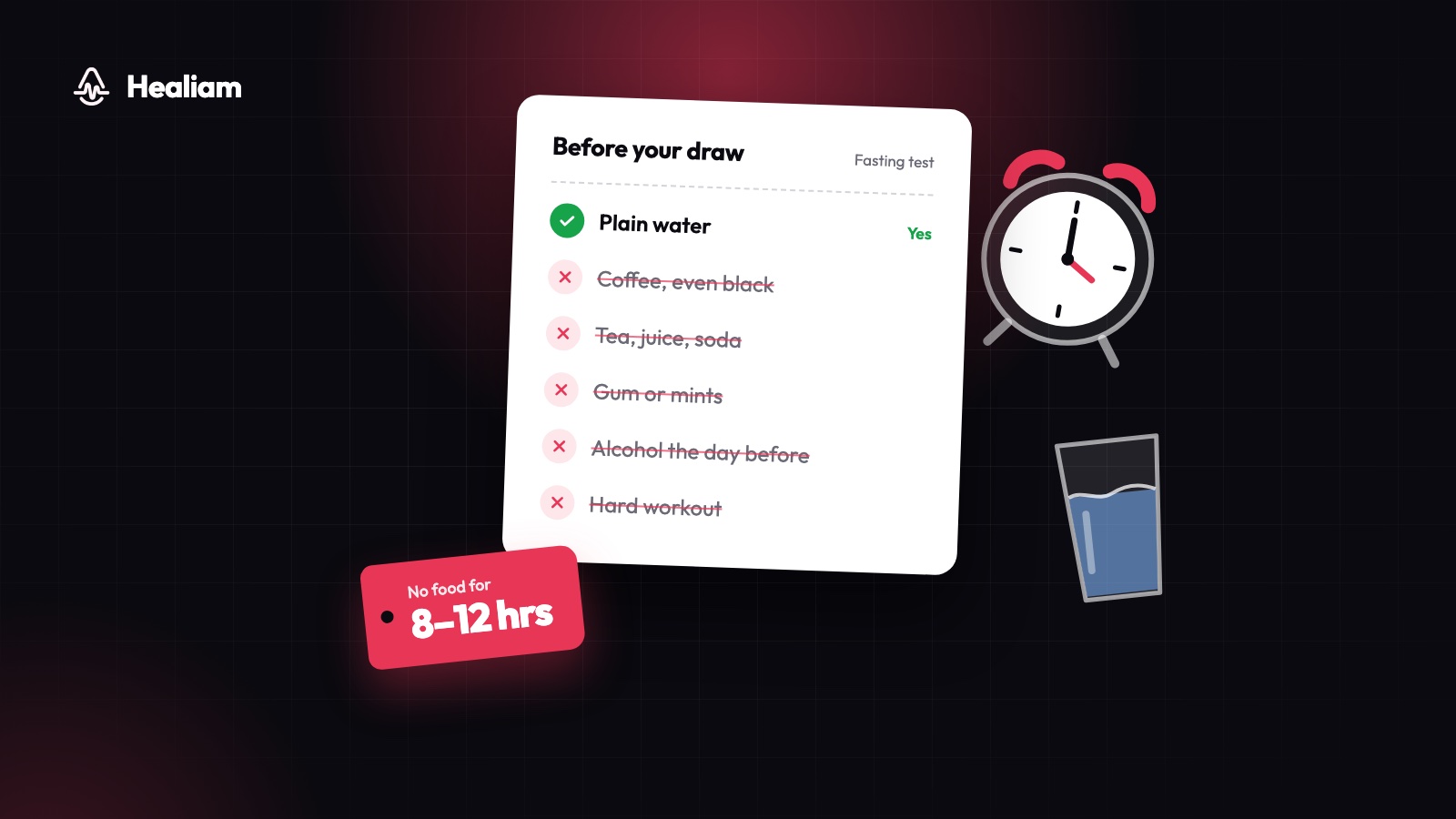
Don’t eat for 8 to 12 hours.
Count back from your appointment time. A handful of nuts, a mint or a splash of milk all count. Glucose and triglycerides are the results a recent meal changes most.
- 2
Don’t drink coffee, even black.
Black coffee has no sugar, but it does have caffeine, which makes you pass more water. Cleveland Clinic’s advice on fasting for blood work is to skip coffee of any kind until after the draw.
- 3
Don’t drink tea, juice, soda or flavored water.
Herbal tea, diet soda and water with lemon aren’t plain water. Sugar, sweeteners and plant compounds from them can reach your bloodstream.
- 4
Don’t chew gum or suck on mints.
Sugar-free gum still gets your digestion going. Save it for the walk out.
- 5
Don’t drink alcohol the day before.
Alcohol can raise triglycerides and total cholesterol, and processing it keeps your liver busy. Give it at least 24 hours.
- 6
Don’t do a hard workout in the 24 hours before.
Heavy lifting, long runs and intense classes release muscle enzymes such as creatine kinase into the blood. An easy walk is fine.
- 7
Don’t smoke while you fast.
Smoking sits on the same list as food and gum during a fast. Wait until the draw is done.
- 8
Don’t cut back on water.
Plain water is allowed the whole time, and it helps. Well-filled veins are easier to find, and a dehydrated sample can read more concentrated than you really are.
- 9
Don’t stop your medicines on your own.
Keep taking what you’re prescribed unless the doctor who prescribed it tells you otherwise, and mention every supplement you take. There’s more on this below.
| Habit | What it can do | Healiam panel results it can affect |
|---|---|---|
| A recent meal or snack | Raises sugar and fats in the blood while food is absorbed | Glucose, triglycerides |
| A hard workout | Releases enzymes from working muscle | Creatine kinase, AST, LDH |
| Alcohol the day before | Can raise blood fats and load the liver | Triglycerides, total cholesterol, ALT, AST |
| Too little water | Makes veins harder to find and concentrates the sample | The draw itself, urea nitrogen |
| High-dose biotin | Can push some lab methods to false highs or lows | Some thyroid hormone results |
For what those markers mean, our plain-words guides to ALT and AST and creatinine and BUN (BUN is urea nitrogen) go through them one by one.
What you can still do
- Drink plain water: as much as you like, from the evening before right up to your draw.
- Take prescribed medicines: with water, unless your doctor has said to wait. If a pill has to be taken with food, ask your doctor how to handle the morning of the test.
- Sleep through most of it: by booking an early slot, so the 8 to 12 hours pass overnight.
- Pack a snack: for afterwards. Food is fine the moment you’re done, and a bite helps if you feel light-headed.
How to time your fast
Work backwards from the draw. For an 8:30 AM appointment:
- 12 hours: means your last bite is at 8:30 PM the night before.
- 8 hours: means your last bite is by 12:30 AM. For most people that’s just dinner, then nothing until the test.
Keep dinner ordinary. A huge or greasy meal is still working through your system the next morning, so the night before isn’t the time for a feast. And there’s no prize for going past 12 hours: a longer fast doesn’t make results better, and it makes feeling faint after the draw more likely.
If you ate, had coffee or trained by mistake
Say so before the draw. A glucose or triglyceride result taken after breakfast can look like a problem that isn’t there, and chasing it costs you another morning and maybe another bill. You may be asked to come back on a different day.
How much it matters depends on what’s being tested. A complete blood count isn’t changed by a recent meal, so a CBC on its own can often go ahead. A broad panel that includes glucose and lipids, like Healiam’s, is better rebooked than guessed at. At a Healiam fair, tell the team when you check in.
Medicines and supplements
Don’t stop a prescribed medicine just because you have blood work coming up. Many results are only useful if they show you on your usual treatment, and stopping some drugs suddenly is risky. If your doctor wants you to hold a dose, they’ll tell you.
Supplements are worth a mention of their own, biotin above all. Since 2017 the FDA has warned that high doses of this B vitamin, sold in many hair, skin and nail products, can make certain lab tests read falsely high or falsely low, hormone tests among them. Some of those products contain up to 650 times the recommended daily amount. If you take one, tell the lab, and ask your doctor whether to pause it before your test.
Getting ready for a Healiam blood test
Healiam’s health fairs run from 8:00 to 10:00 AM, so most of your fast happens while you sleep. The prep is the same at every fair:
- Nothing to eat for 8 to 12 hours, and keep sipping water throughout.
- Coffee, tea, juice and gum wait until you’ve given blood.
- No hard exercise for 24 hours beforehand.
- Keep taking your medicines as your doctor advises.
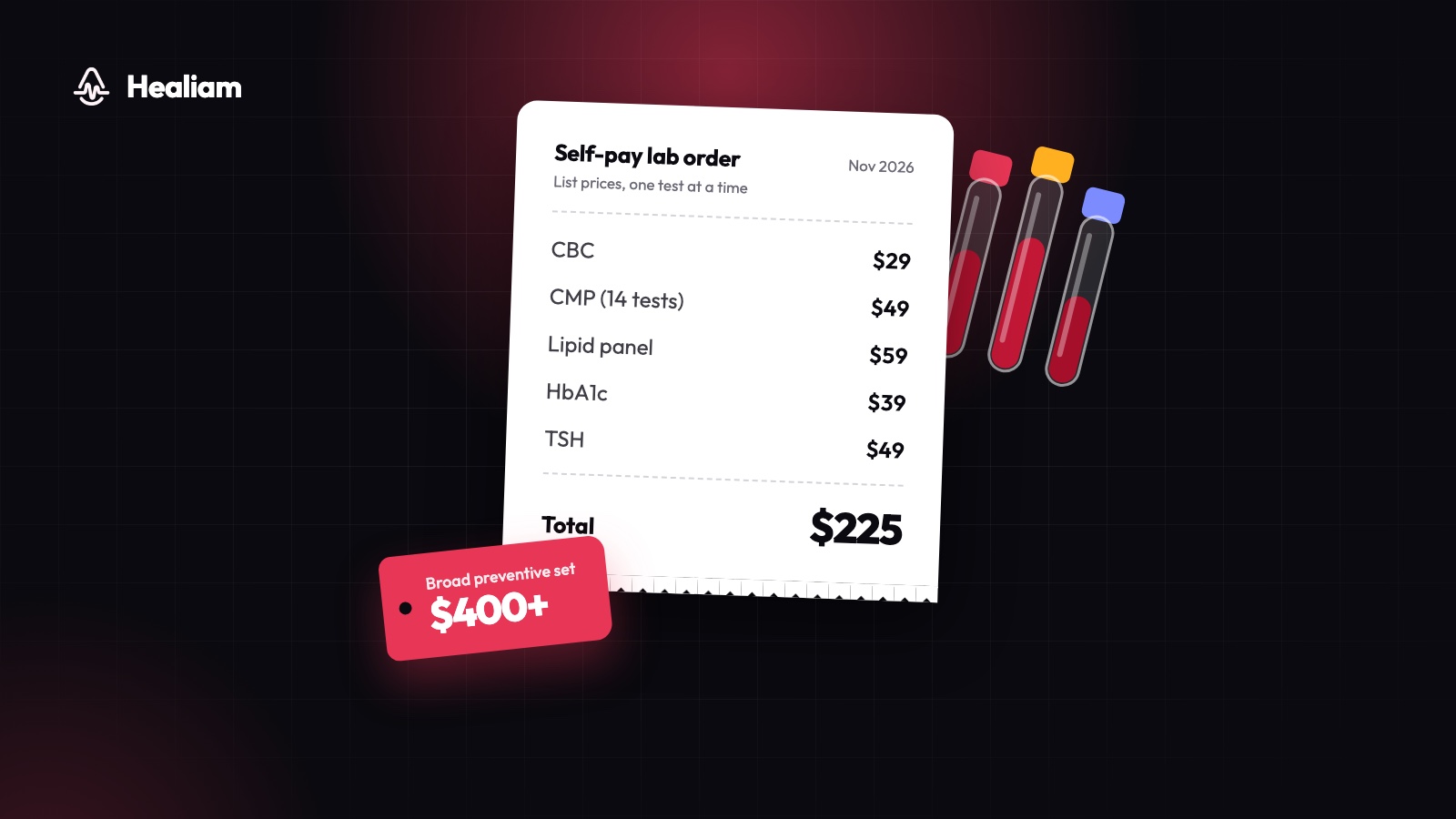
Bring your phone with the Healiam app and a card to pay with, HSA cards included; no insurance card or referral is needed. The draw is two vials and takes about seven minutes, and then you can eat. For $95 you get 56 lab measurements from that one draw, and results follow in the app within a week, usually 4 to 5 business days. To see how that price compares with ordering tests from a lab yourself, check the self-pay lab prices we gathered.
These rules hold at every fair, from Plano and Grand Prairie in Texas to Denver and Centennial in Colorado, Lawrenceville in Georgia and Rahway in New Jersey, which is also the nearest stop for New York. Check what the panel measures, then pick a fair date that suits you.
FAQs
What should you not do before a blood test?
For a fasting test, don’t eat for 8 to 12 hours, and don’t drink anything but plain water: no coffee, tea, juice or soda. Skip gum, smoking, alcohol the day before and hard exercise in the 24 hours before. Don’t stop prescribed medicines unless your doctor tells you to.
How long should you fast before a blood test?
Usually 8 to 12 hours. Your doctor or lab may set a different time for a particular test, so follow the instructions you were given. An early-morning appointment means most of the fast happens overnight.
Can you drink water before a fasting blood test?
Yes. Plain water is allowed and helps, because veins are easier to draw from when you’re well hydrated. Avoid flavored or sweetened water, and water with lemon.
Can you drink black coffee before a fasting blood test?
No. Black coffee has no sugar, but it still contains caffeine, which makes you lose water. Stick to plain water until the draw is done.
What happens if you accidentally eat before a fasting blood test?
Tell the person drawing your blood before they start. Your glucose and triglycerides may read higher than usual, so you may be asked to come back another day. Tests that food doesn’t affect, such as a CBC, can often go ahead.
Can you take your medication before a blood test?
In most cases, yes, with water. Don’t stop a prescribed medicine unless your doctor tells you to, and ask them about any pill that has to be taken with food. Tell the lab about supplements too, biotin especially.
Do I need to fast before a Healiam blood test?
Yes: 8 to 12 hours without food before your draw, with water allowed. Skip coffee, tea, juice and gum, and avoid hard exercise for 24 hours. Fairs run from 8:00 to 10:00 AM, so you can eat soon after you wake up.
This article is for educational purposes and does not provide medical advice, diagnosis, or treatment. Results should be interpreted in the context of your individual health and, when appropriate, discussed with a licensed healthcare professional. Healiam testing and result delivery do not replace professional medical advice, diagnosis, or treatment.